
Air Duct Cleaning After a Dust Storm in Las Vegas
.png)
Haboobs, thunderstorm-driven dust storms common in the Las Vegas valley during monsoon season, can produce wind gusts exceeding 60 miles per hour and dust walls reported up to a mile high. The Las Vegas monsoon season runs from July 1 through September 30, and Clark County's Department of Environment and Sustainability has issued Air Quality Advisories for hazardous particulate levels during major events. That volume of airborne dust does not stay outdoors. It enters homes through return vents, window and door gaps, and any existing leaks in the ductwork itself, often depositing more debris in a single storm than months of ordinary daily use.
This article covers why dust storms affect ductwork specifically, how to identify the signs afterward, and what steps to take once the storm has passed.
Why Las Vegas Dust Storms Are Especially Hard on Ductwork
These storms form when thunderstorm downdrafts hit the ground and spread outward, lifting enormous amounts of loose desert dust into walls that travel for miles at high speed. Because a haboob arrives suddenly and moves through in a matter of minutes, it delivers a far more concentrated dose of airborne particulate than the same amount of ordinary wind exposure spread across weeks. That much airborne dust doesn't stay outside. It gets pulled in through:
- HVAC return vents and fresh air intakes, especially if the system was running before or during the storm
- Small gaps around windows, doors, and attic vents that let dust infiltrate even when everything is closed
- Any existing leaks in ductwork, particularly duct runs in the attic, where a poor seal becomes a direct path for storm dust to enter the system
Unlike everyday desert dust, which builds up gradually, a haboob delivers a concentrated dose all at once, which is why homeowners often notice a sudden spike in dust on furniture, at vents, and in the air filter within a day or two of a major storm.
Dust Storms Versus Everyday Desert Dust: How They Differ
Not every dusty day in Las Vegas is a haboob, and the distinction matters for how much your ductwork is actually affected. Ordinary blowing dust, the kind that shows up on windy but otherwise unremarkable days, adds to the baseline dust load a Las Vegas home already deals with, but it accumulates gradually and rarely overwhelms a functioning filter on its own. A haboob is a different event entirely, a thunderstorm-driven wall of dust that can reduce visibility to near zero within minutes and register unhealthy or hazardous readings on the Air Quality Index. An AQI reading of 101 or higher is considered unhealthy for sensitive groups, and readings during major haboobs have climbed well beyond that threshold into hazardous territory. That difference in intensity is why a single haboob can justify an immediate filter check and inspection, while routine windy days generally don't.
Preparing Your HVAC System Before a Predicted Dust Storm
Monsoon season dust storms are often forecast at least a few hours in advance through National Weather Service alerts, which gives homeowners a window to reduce how much dust actually enters the system.
- Monitor local weather alerts during monsoon season, particularly from late afternoon through evening, when thunderstorm-driven haboobs are most likely to develop.
- Close windows and doors completely before the storm arrives, including any attic access points that might otherwise be left cracked open.
- Switch your HVAC system to recirculate mode if it has one, which limits how much outside air, and the dust it carries, gets pulled into the system while the storm is active.
- Avoid running exhaust fans unnecessarily during the storm, since they can slightly increase how much outside air gets drawn into the home to replace what's being vented out.
Attic Ductwork Is the Most Vulnerable Point During a Storm
Many Las Vegas homes route significant portions of their ductwork through the attic, and this is where dust storm infiltration tends to be worst. Attic spaces have their own ventilation, ridge vents, soffit vents, and gable vents, that are designed to let air move through for temperature regulation, but the same openings allow storm-driven dust to enter the attic space itself. From there, any existing gap, seam, or poorly sealed connection in the ductwork gives that dust a direct path into the air being delivered to your living space. This is part of why homes with older or already-leaky attic ductwork tend to notice a bigger dust problem after a haboob than homes with newer, well-sealed duct systems, even when both experienced the same storm.
Signs Your Ducts Took On Storm Dust
- A sudden increase in dust on surfaces that doesn't match your normal cleaning routine
- A gritty or dusty smell when the HVAC system kicks on
- A visibly dirty air filter sooner than expected after the storm
- Reduced airflow from vents, which can indicate dust buildup restricting the system
- Allergy or respiratory symptoms flaring up in the days following the storm
What to Do After a Major Dust Storm
- Check and likely replace your air filter right away. A filter that was in place during the storm has probably taken on far more debris than usual, and a clogged filter restricts airflow and reduces how well your system runs. Our air filter replacement service can help if you're not sure what to replace it with.
- Have your ductwork inspected, not just cleaned. A storm can also be a good moment to check for leaks that let dust in more easily than a well-sealed system would. If a leak is found, it's worth repairing at the same time as the cleaning so the next storm doesn't cause the same problem.
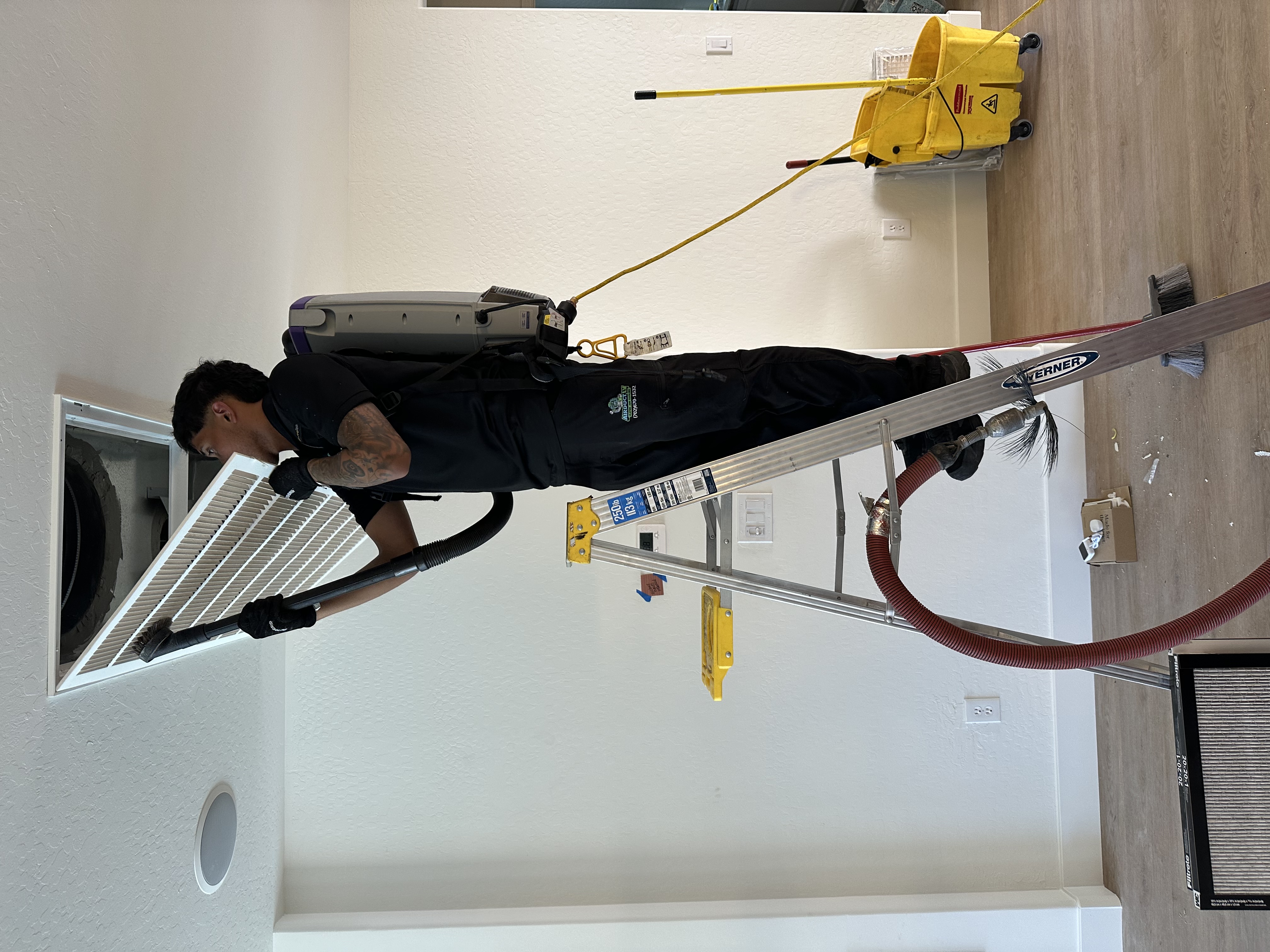
- Schedule a full duct cleaning if the buildup is significant. A single storm might not always require a full cleaning on its own, but a bad monsoon season with multiple haboobs can add up fast. Our air duct cleaning team can assess how much has actually accumulated before recommending a full service.
- Get your AC system checked if it seemed to struggle right after the storm. Extra dust reaching the coil or blower can strain a system that was already working hard through a hot, dusty summer. An AC tune-up after a rough monsoon stretch can catch problems before they turn into a bigger repair.
- Have the system inspected for damage if the storm was severe. High winds during a haboob can also affect outdoor HVAC components. If your system isn't running the way it did before the storm, our HVAC repair team can check whether something more than dust is going on.
Multiple Dust Storms Per Monsoon Season Are Common
Since monsoon season lasts three months, homes in the valley typically experience more than one haboob or dust event per season, particularly in years with active monsoonal patterns. Ductwork with existing minor leaks or reduced seal integrity accumulates dust more quickly under repeated exposure, and by the end of September this can measurably affect both air quality and system performance.
Dust Storms Affect Commercial HVAC Systems Too
Businesses across the valley deal with the same storm dust, often across larger HVAC systems serving more square footage. A retail space, office, or warehouse that took on a heavy dose of dust during a haboob is circulating that same air to every employee and customer using the building. Our commercial air duct cleaning team works with property managers throughout the valley to get systems cleared out after major dust events before it becomes a bigger indoor air quality issue.
FAQ
How long after a dust storm should I check my air filter?Within a day or two if possible, especially if the system was running during or right after the storm. A filter can fill up faster than expected following a major haboob.
Do I need a full duct cleaning after every dust storm?Not necessarily after a single storm, but repeated events over a monsoon season can add up. An inspection can tell you whether buildup has reached the point where a full cleaning makes sense.
Can a dust storm actually damage my HVAC system, not just dirty the ducts?It's possible, particularly if high winds affected the outdoor unit or if enough dust reached internal components like the coil. If performance seems off after a storm, it's worth having the system checked rather than assuming it's just a dust issue.
Why does Las Vegas get haboobs specifically?Haboobs form when strong thunderstorm downdrafts hit the ground and spread outward, lifting loose desert dust into the air. The Mojave Desert's dry, loose soil combined with monsoon season thunderstorms creates the right conditions for these storms to form across the valley.
Is it safe to run my AC during a dust storm?Many homeowners choose to switch to recirculate mode or turn off fresh air intake during an active storm if their system allows it, since this limits how much dust gets pulled in while the storm is happening. Once the storm passes, checking the filter and ducts is the next step.
Air Duct LV Heating & Cooling is IICRC certified and BBB A+ rated, serving Las Vegas, Henderson, Summerlin, and North Las Vegas. Call (702) 670-1532 to schedule a free quote today.



Available Around the Clock
We Are Available 24/7 To Take Emergency HVAC Appointments In Las Vegas, NV
Emergency Air Duct Cleaning Company · Same-day service across all of Las Vegas Valley