
Why Is Dust Constantly Coming Out of Your Vents in Las Vegas?
.png)
Clark County's Division of Air Quality describes airborne dust as a form of inhalable air pollution called particulate matter and issues dust advisories when winds kick it up across the valley. On those days, the county tells residents to keep windows and doors closed and to run their air conditioner to filter out particulates. That only works if your system is filtering the air instead of stirring dust around. If dust is coming out of your vents, something in your system or your home is letting it in. This article covers the most common causes in Las Vegas homes, how to tell them apart, and what to do about each one.
Is it normal to see dust coming from your vents?
A thin layer of dust on a vent cover is normal. Air carries small particles, and some settle at the openings. Visible puffs of dust when the system starts, or vents that look dirty again a few days after you wipe them, are not normal.
The EPA gives a useful benchmark. It says you should consider duct cleaning when ducts are clogged with excessive dust and debris, or when particles are being released from your supply registers. Supply registers are the vents that blow air into a room. The EPA also says dirty ducts are only one source of dust. Cooking, cleaning, and simply moving around can cause more exposure. So the first job is to find where your dust is really coming from.
Why is dust coming out of your vents?
A clogged or poorly fitted air filter
The filter is your system's first line of defense. When it clogs, the blower struggles and more dust slips past. If the filter is too thin or does not fit its slot tightly, air goes around the edges and skips filtering altogether. Because Las Vegas has frequent windy days, check your filter every month. Our air filter replacement services can take care of it.
Leaks that pull in attic dust
Return ducts pull air from your rooms back to the AC. If a return duct has a gap or a loose joint, it pulls in air from wherever that gap is. In many Las Vegas homes, that means the attic, which holds dust, insulation fibers, and debris. That dirty air runs through the system and comes out of your supply vents. This is a common reason dust comes back fast after cleaning.
A technician can find and seal these leaks as part of an HVAC repair service. If worn or loose attic insulation is shedding fibers, attic insulation services can deal with that source too.
Dust that has built up inside the ducts
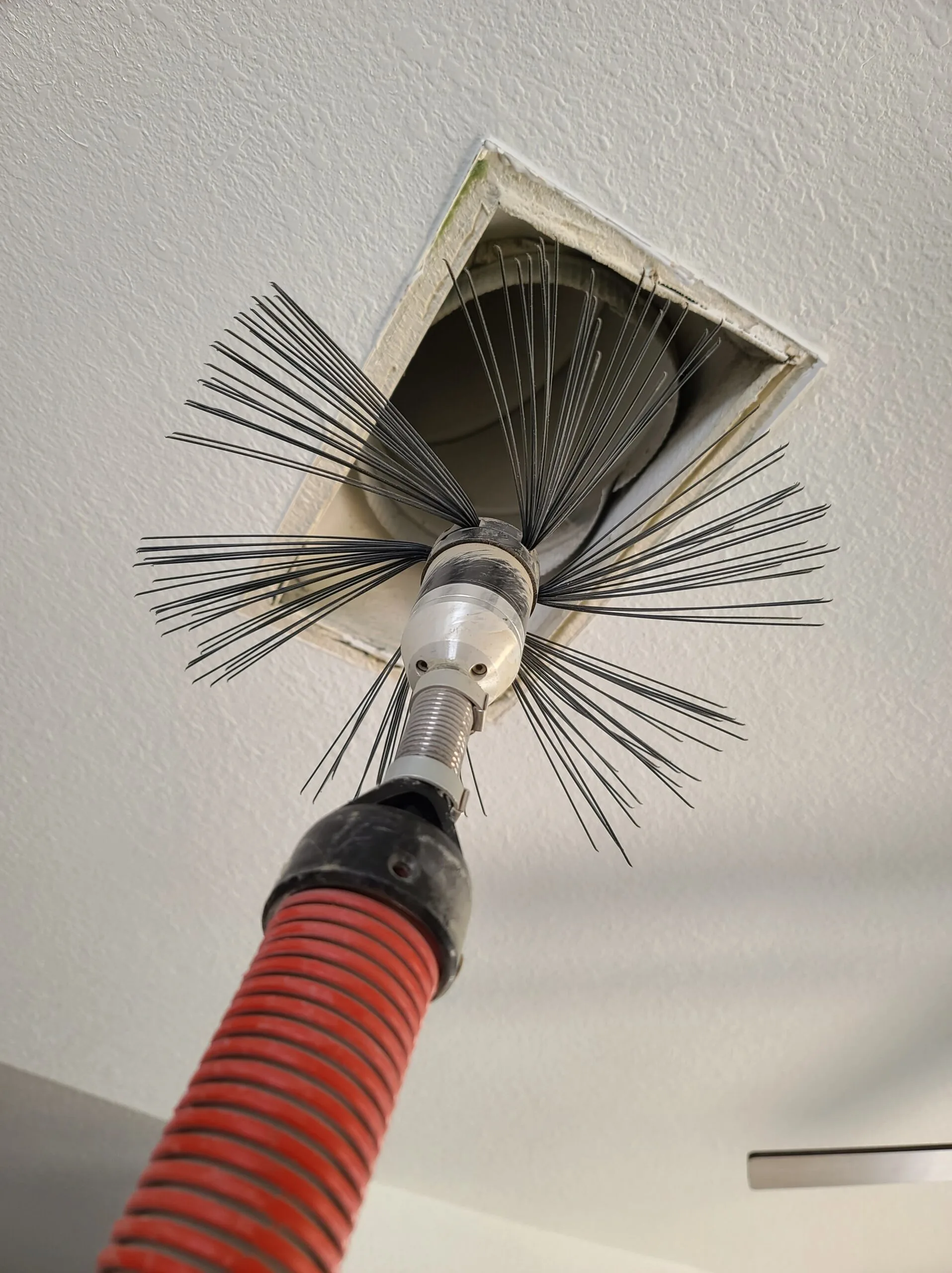
Over the years, dust settles on the inside of ducts. When the system starts, the airflow can lift loose material and blow it out. This is more likely after a remodel or construction, when drywall dust and sawdust get into open vents. Desert wind also carries fine dust into homes through doors, windows, and return vents, and storm winds during monsoon season can add more. Professional air duct cleaning removes this buildup.
Dust from inside your home
Pets, carpet, bedding, and fabrics shed fibers and skin cells all day. Return vents pull those particles in. If most of the dust is around your return grilles, this is a likely cause. A vacuum with a HEPA filter, which traps very small particles, keeps that dust from going back into the air.
Soot and lint
Dark specks can come from candles, incense, or a fireplace. A dirty chimney can release soot, so regular chimney cleaning helps if you burn wood. Lint from a dirty or leaking dryer vent can also end up in your home's air, which is why dryer vent cleaning belongs in the same routine.
How can you tell where the dust is coming from?
Match what you see to the likely cause:
- Dust mostly around return vents points to household dust or a weak filter.
- Puffs of dust from supply vents at startup point to buildup inside the ducts or a leak.
- Dust that returns within days of cleaning points to a leak or a filter that does not fit.
- Dust that gets worse after windy or stormy days points to outdoor dust entering through leaks and return vents.
- Dark or black specks can be soot, lint, or possibly mold.
What can you do yourself?
Start here:
- Replace the air filter and make sure it fits tightly in its slot.
- Turn the system off, remove vent covers, and vacuum the inside of each opening with a brush attachment.
- Wash the covers in warm soapy water, dry them fully, and put them back.
- Check the connections where ducts meet vents and registers. Seal small gaps with mastic or metal tape. ENERGY STAR says these connections are common places for leaks and warns against using regular duct tape.
- On windy days, keep windows and doors closed and let your AC run, as Clark County advises.
Do not spray cleaners or chemicals into the ducts yourself. Leave anything past the vent opening to a professional.
When does duct cleaning help?
The EPA says there is no evidence that a light amount of household dust in ducts poses a health risk, and duct cleaning has never been shown to prevent health problems. It does say cleaning makes sense when ducts are heavily clogged with dust and debris, when particles are released from your registers, or when you have vermin or visible mold. Cleaning removes loose buildup so it stops blowing into your rooms.
Cleaning will not stop dust if leaks keep pulling in new dirt. The best order is to fix leaks and filter problems first, then clean if there is heavy buildup. Ask any cleaner to show you photos of the inside of your ducts before you agree to the work. We take before and after photos on every job.
FAQs
Do air purifiers fix dusty vents? A purifier can lower the dust in one room, but it does not fix the source. It will not seal a leak or clean the ducts. The EPA suggests air cleaners that remove particles, such as high-efficiency mechanical filters, and advises against ones that generate ozone.
How soon will dust come back after duct cleaning? Some dust always returns because your home creates it every day. You should stop seeing puffs from the vents right away if the buildup was the cause. If dust returns quickly, a leak or a poor filter fit is the more likely reason.
Can dusty vents make my AC work harder? Dust on the blower or coils can restrict airflow, and your system has to work harder to move air. A yearly AC tune-up lets a technician check those parts and catch problems early.
Should I cover my vents with cheesecloth or filter material? It is not a good idea. Extra material over a vent can restrict airflow and raise pressure in the ducts. If you want to try a vent filter, use one made for registers and ask a technician first.
How do I know if the dark dust is mold? You cannot tell by looking. The EPA says a positive determination of mold can only be made by an expert and may need lab analysis. Ask any service provider to show you the mold they claim to see. If mold is confirmed, mold removal should be handled by a professional.
Final thoughts
Constant dust from your vents usually comes from a filter problem, a duct leak, or buildup inside the ducts. Check the simple things first, then have the system inspected if the dust keeps coming back.
Air Duct LV Heating & Cooling is IICRC certified and BBB A+ rated, serving Las Vegas, Henderson, Summerlin, and North Las Vegas. Call (702) 670-1532 to schedule a free quote today.


.webp)

Available Around the Clock
We Are Available 24/7 To Take Emergency HVAC Appointments In Las Vegas, NV
Emergency Air Duct Cleaning Company · Same-day service across all of Las Vegas Valley