
How Long Do HVAC Systems Last in Las Vegas?
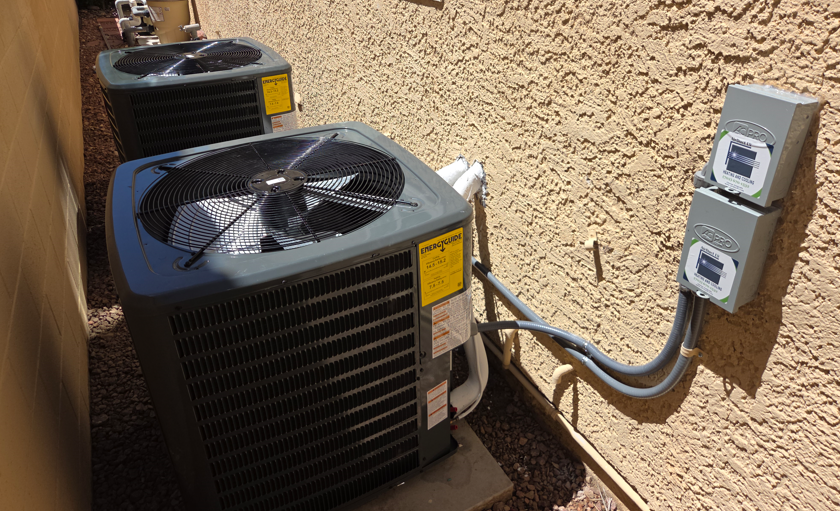
If your air conditioner or heat pump is more than 10 years old, ENERGY STAR suggests it is time to start thinking about a replacement. A new certified unit can cut your heating and cooling costs by up to 20 percent. In Las Vegas, a 10-year-old cooling system has usually worked much harder than one in a milder climate, because it runs for long hours every summer.
Most central air conditioners and heat pumps in Las Vegas last about 10 to 15 years. That is a few years less than the 15 to 20 years often quoted for the rest of the country. Knowing how old your system is and what condition it is in helps you plan ahead instead of dealing with a breakdown in July. In this guide, we explain how long each type of equipment lasts, why the desert climate shortens equipment life, and what to expect as your system ages. We also cover how to decide between a repair and a replacement, and how to help your system last longer.
How Long Each Type of HVAC Equipment Lasts
Your HVAC system is made up of several parts, and each one ages at its own pace. The outdoor unit holds the compressor, and it takes the most punishment in the Las Vegas heat. That is why the outdoor unit is usually the first major part to wear out. When people ask how long their HVAC system will last, they usually mean the cooling equipment. The table below compares the typical national lifespan of each type of equipment with what you can expect in a Las Vegas home.
A central air conditioner, also called a split system, is the most common setup in Las Vegas homes. It has an outdoor unit with the compressor and an indoor unit with the coil and blower. Its lifespan depends mostly on the outdoor unit, which sits in direct sun and handles the heaviest load. A heat pump looks and works much like a central air conditioner, but it can also run in reverse to heat your home in winter. Because a heat pump works in both seasons, it builds up more hours each year and tends to land on the shorter end of the range.
Gas furnaces are the exception in Las Vegas. Winters here are mild, so a furnace may only run a few months a year. With regular inspections, a furnace often reaches the long end of its range or goes beyond it. Ductless mini splits also hold up well when they are sized and installed correctly. Each indoor unit serves only one room, and the outdoor compressor changes its speed instead of always running at full power. Rooftop package units keep every part in one cabinet on the roof. You will find them on some townhomes and older homes. Since the whole unit sits in direct sun, package units tend to wear out sooner than split systems.
Why Las Vegas Heat Shortens HVAC Lifespan
An HVAC system wears out based on how many hours it runs and how hard it works during those hours. Las Vegas pushes both higher than most climates, and a few local conditions add extra strain. The diagram below shows the four places where these conditions hit your HVAC system.
Each number in the diagram matches one of the four sections that follow. Here is what each one shows:
- Outdoor unit in direct sun. The compressor and fan motor work hardest on hot afternoons.
- Dust on the outdoor coil. Desert dust blocks the metal fins that release heat from your home.
- Air handler and ducts in the hot attic. Attic heat wears down the blower motor, the controls, and the ducts.
- Power surge from a monsoon storm. Lightning and sudden power changes can damage control boards and other electrical parts.
Long Runtime and Extreme Outdoor Heat
On a 110-degree afternoon, your outdoor unit has to push heat out of your home into air that is already very hot. That makes the compressor work much harder than it would in a milder climate. Many systems here run almost nonstop during the hottest weeks of summer. This wears down the compressor, the outdoor fan motor, and small electrical parts like capacitors and contactors, which help the motors start and stop. A failed capacitor is one of the most common summer repairs in Las Vegas. If your AC keeps going through capacitors, it is often a sign of age.
Desert Dust on Coils and Filters
Fine desert dust builds up on the outdoor coil, which is the set of metal fins that releases heat from your home. A dusty coil cannot release heat as well, so your AC has to run longer to do the same job. Inside, dust clogs the air filter and can coat the indoor coil if filters are not changed on time. Each of these problems makes the equipment work harder. Over the years, that extra effort shortens the life of your equipment.
Attic Heat on Air Handlers and Ducts
In many Las Vegas homes, the air handler and most of the ductwork sit in the attic. In summer, the attic gets much hotter than the air outside. That heat is hard on the blower motor, the electrical controls, and the ducts themselves. Over time, ducts can crack or come apart at the joints and leak cooled air into the attic. When that happens, your AC has to run longer to keep your home comfortable.
Power Surges During Monsoon Storms
Summer monsoon storms bring lightning and sudden changes in power across the Valley. A power surge can damage the control boards and electrical parts in both the outdoor unit and the air handler. Newer variable-speed systems rely on electronics that are especially sensitive to surges. A surge protector for your HVAC equipment is a low-cost way to lower this risk.
Other Factors That Decide How Long Your System Lasts
Climate explains a lot, but the same equipment can last very different amounts of time in two homes on the same street. Installation quality is one of the biggest reasons. A system that is too large for your home cools it quickly, shuts off, and turns back on a few minutes later. All that starting and stopping wears out parts faster. A system that is too small runs nonstop on hot days and never gets a break. Wrong refrigerant levels or poorly designed ductwork can also shorten a system’s life from the first day.
Maintenance history matters just as much. A system with a yearly tune-up, clean filters, and a clean outdoor coil runs with less strain than one that only gets attention when it breaks. A tune-up can also catch small problems early, like a weak capacitor or a slow refrigerant leak. Fixing these problems early protects the compressor, which is the most expensive part to replace.
Your home itself also plays a role. Poor attic insulation and leaky ducts let more heat into your home and more cooled air out of it. That means your system runs longer to keep the same temperature. Improving your attic insulation lowers the load on your system every summer, and that lighter workload adds up over the years.
What to Expect From Your HVAC System at Each Age
Age alone does not decide when an HVAC system needs to be replaced. Age does tell you what kind of problems to expect and how to plan for them. The chart below shows the general stages most Las Vegas cooling systems go through.
In the first five years, a well-installed system should run with very few problems, and most parts are still under warranty. Between five and ten years, wear parts like capacitors, contactors, and fan motors start to fail. These repairs are normal and usually worth doing. After ten years, it is smart to compare repair costs with the cost of a new system. It also helps to start setting money aside, even if the system still runs well. Past fifteen years, most cooling systems here are on borrowed time. Replacing your system in spring or fall is much easier than replacing it in an emergency during a heat wave.
Warning Signs Your HVAC System Is Wearing Out
An HVAC system near the end of its life usually gives you several warnings before it stops working. The most common warning is a power bill that keeps rising while your usage stays the same. This means the equipment is losing efficiency and running longer to keep up. You may also notice that your home no longer reaches the set temperature on the hottest afternoons. Some rooms may stay warmer than others, even after you change the filter.
Repairs are another clue. Two or more major repairs in a couple of years is a common warning. It usually means the system is reaching the stage where problems come faster and cost more. Grinding, buzzing, or loud clanking from the outdoor unit points to worn parts. So does a system that turns on and off every few minutes, or a refrigerant leak that keeps coming back. One sign on its own may only need a repair. Several signs together on a system over ten years old usually point to a replacement.
How to Decide Between Repairing and Replacing Your System
When your HVAC system breaks down, the right choice depends on its age, the cost of the repair, and how much life it has left. A common rule of thumb is to multiply the system’s age by the repair cost. If the result is more than 5,000, replacement usually makes more sense. If it is well under 5,000, the repair is usually worth doing. The table below shows how this rule works with three examples.
Another common guideline is to consider replacing the system when one repair costs close to half the price of a new one. Both rules are a starting point, not a final answer. A young system with one costly repair is often worth fixing. An older system with a failing compressor or a leaking indoor coil is usually better replaced. Those are the most expensive parts to fix, and replacing one of them still leaves every other aging part of the system in place.
A technician from our HVAC repair team can inspect your system, explain what failed, and give you an honest comparison. If replacement makes more sense, a properly sized HVAC installation gives you a system that runs more efficiently and fits your home better.
How Refrigerant Type Affects Repair Costs on Older Systems
The refrigerant in your system can change the repair math, especially if your system was installed before 2010. Many older systems use R-22, a refrigerant that is no longer made or imported in the United States. According to the EPA, you can keep using and servicing an R-22 system, but only recycled or older supplies are available. That limited supply can make a refrigerant leak expensive to fix. This is one reason many homeowners choose to replace an R-22 system instead of recharging it again.
The rules have changed for newer systems too. Under EPA rules, new split systems installed after January 1, 2026 must use a refrigerant with a lower impact on the climate. Most new equipment now uses refrigerants like R-454B or R-32 instead of R-410A. If you have an R-410A system, you can still repair it and replace major parts. There is no need to replace a working system because of this change. You can find your refrigerant type on the nameplate of the outdoor unit.
What Affects the Cost of Replacing an HVAC System
If your system is nearing the end of its life, it helps to know what drives the price of a new system. The biggest factor is the size of the system, which depends on your home’s square footage, insulation, windows, and sun exposure. A proper load calculation tells the installer what size you actually need, instead of guessing from the old unit. The type of system matters too, since a heat pump, a split system with a gas furnace, and a ductless system are priced differently.
Efficiency also affects the price. Higher-efficiency systems cost more up front but use less power, which matters in a city where the AC runs for months at a time. The condition of your ductwork, electrical upgrades, and how easy the attic or roof is to reach can add to the job as well. When you compare quotes, make sure each one covers the same equipment, the same work, and the same warranty, so you are comparing them fairly.
How to Make Your HVAC System Last Longer in Las Vegas
The most helpful step is a professional AC tune-up every spring, before the heavy cooling season starts. During a tune-up, a technician cleans the outdoor coil, tests the capacitors and other electrical parts, and checks the refrigerant level. This prepares your system for months of heavy use. If you have a heat pump, a second visit in the fall is worth considering, since a heat pump works year-round.
At home, change your air filter every 30 to 60 days during the cooling season. A clean filter keeps air moving freely and protects the indoor coil and blower from dust. If you would rather not keep track of filter changes, our air filter replacement services in Las Vegas can handle it on a regular schedule. Outside, keep at least two feet of open space around the outdoor unit and clear away leaves, weeds, and debris so the unit can release heat properly.
How you set the thermostat matters too. Setting the thermostat very low on a 110-degree day does not cool your home any faster. It only keeps the system running longer without a break. A steady, moderate setting helps, and so does a smart thermostat that raises the temperature while you are away. Closing the blinds on sun-facing windows also cuts down the hours your system has to work.
Frequently Asked Questions About HVAC Lifespan
How can I tell how old my HVAC system is?
Look for the nameplate on the outdoor unit and on the furnace or air handler. The manufacture date is often printed there, or it is built into the serial number in a format that differs by brand. If you cannot find it, check the installation paperwork or the installer’s sticker on the equipment.
Can an HVAC system last 25 years or more in Las Vegas?
It is possible for some equipment, especially a gas furnace that only runs a few months a year. For cooling equipment, it is uncommon here because of the long summer runtime. A cooling system that reaches 20 years in Las Vegas usually had a careful installation, regular maintenance, and a well-insulated home.
Should I replace my indoor and outdoor units at the same time?
In most cases, yes. The indoor coil and the outdoor unit are designed to work as a matched pair. Replacing only one can lower efficiency and shorten the life of the new part. Replacing both also lets you move to a current refrigerant and a system sized correctly for your home.
Does a manufacturer warranty tell me how long my system will last?
Not really. A warranty only shows how long the manufacturer will cover certain parts, and many brands offer longer coverage if you register the equipment after installation. A warranty does not promise the system will last that long, and it usually does not cover labor. Keep your registration and maintenance records, since some warranties ask for proof of regular service.
How long does it take to replace an HVAC system?
A simple replacement of a central air system usually takes a day or two. It can take longer if the ductwork, electrical, or refrigerant lines need changes, or if the attic or roof is hard to reach. Your installer should give you a timeline before the work starts.
Do I need new ductwork when I replace my HVAC system?
Not always. If your ducts are sealed, in good shape, and sized correctly, they can often stay. Ducts in a Las Vegas attic can crack, sag, or come apart over the years, though. Connecting a new system to leaky ducts wastes part of what you paid for, so ask your installer to inspect the ducts first.
Plan Ahead So Your HVAC System Does Not Fail in Summer
Most cooling systems in Las Vegas last about 10 to 15 years. The ones that last longest get regular tune-ups, clean filters, and a home that does not overload them. Once your system passes ten years, watch for warning signs and start comparing repair costs with replacement. Planning ahead lets you choose the right system on your own schedule, instead of making a rushed decision during a heat wave.
Air Duct LV Heating & Cooling is IICRC certified and BBB A+ rated, serving Las Vegas, Henderson, Summerlin, and North Las Vegas. Call (702) 670-1532 to schedule a free quote today.



Available Around the Clock
We Are Available 24/7 To Take Emergency HVAC Appointments In Las Vegas, NV
Emergency Air Duct Cleaning Company · Same-day service across all of Las Vegas Valley